
Understanding how rare and valuable green metals—such as nickel, platinum, and copper—reach the Earth’s surface has long been a captivating challenge for scientists. These metals are essential for building sustainable technologies like renewable energy infrastructure, electric vehicle batteries, and green electronics. However, their heavy nature and tendency to stay trapped deep within the Earth’s crust make their upward journey daunting. Recent groundbreaking research from the University of Western Australia sheds light on this mystery by revealing a natural process that facilitates the ascent of these metals. Central to this discovery is the role of carbonatite magmas, a unique fluid that acts as a biological life jacket, ensuring these metals can escape the depths and reach the surface where they can be mined and utilized.
Decoding Nature’s Hidden Mechanism
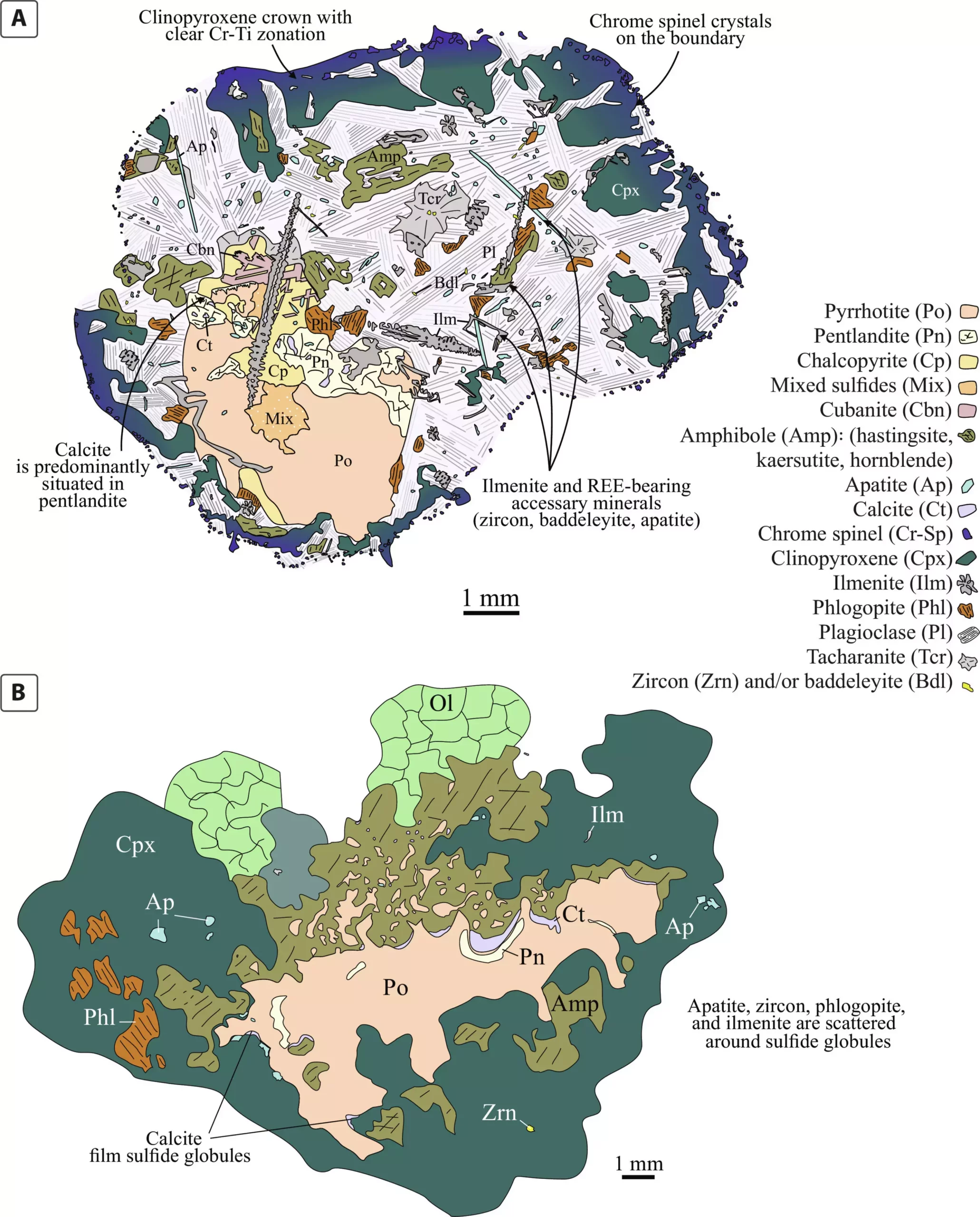
The research team led by Dr. Maria Cherdantseva and Professor Marco Fiorentini applied innovative experiments that simulate the extreme conditions inside large volcanoes. Their approach was inspired by everyday observations—comparing the separation of oil from water to the behavior of magmatic liquids. They found that, under the right conditions, a special magmatic phase called carbonatite separates from the main magma. This separation isn’t an arbitrary process; it plays a crucial role in the transportation of heavy metals. The green metals exhibit an affinity for carbonatite, which acts as a carrier or a magnet, binding to the metals and thus reducing their overall density. The lower mass of these metal-carbonatite pairs effectively allows them to float or rise within the magma, circumventing the typical sluggishness that heavy metals experience in viscous magmas.
The Power of a Natural ‘Life Jacket’
The analogy of a life jacket is particularly compelling. Just as a life jacket keeps a person afloat, carbonatite prevents metals from sinking or becoming trapped. This process enables the lightweight metal-carbonatite pair to ascend more easily through the viscous magma, making the chance of these metals reaching the volcano’s surface significantly higher. This revelation challenges previous assumptions that heavy metals remain confined at depth, revealing instead that natural separation processes actively assist their upward migration. It is a testament to the sophistication of Earth’s internal processes—more dynamic and efficient than once thought—and opens doors to more accurate predictions about where green metals can be found.
Implications for Sustainable Mining and Environmental Conservation
This newfound understanding holds immense promise for the future of mineral exploration. Instead of relying on broad, energy-intensive excavation methods, companies can better target specific volcanoes and volcanic regions likely to contain these valuable metals. The ability to predict metal-rich volcanoes with higher precision means that exploration can be more environmentally conscious, reducing unnecessary disruption of ecosystems. Moreover, by understanding the natural transport mechanisms, the industry might develop more refined extraction technologies that mimic these processes, potentially leading to cleaner and more efficient mining practices.
Revolutionizing Our Approach to Resource Discovery
While the findings are promising, they also call for a reevaluation of geological models that have historically underestimated the role of magmatic separation processes. The insights gained challenge the simplistic view that heavy metals remain locked in the depths indefinitely. Instead, they suggest that Earth’s internal machinery is more dynamic, with natural “transport systems” that could be harnessed to meet future demands for green metals. As researchers continue to decode these subterranean pathways, we are likely to witness a paradigm shift in how the mining industry approaches resource discovery—transforming a process once considered purely destructive into one that harmonizes with Earth’s natural systems, paving the way for a more sustainable future.
Leave a Reply