
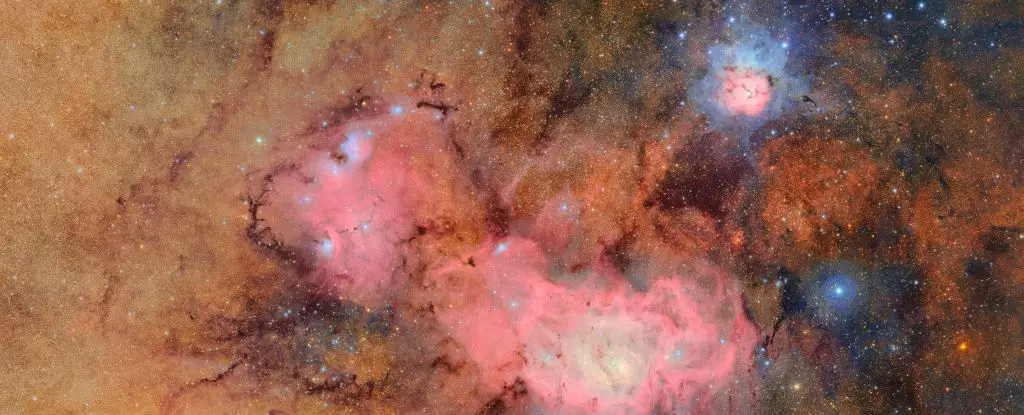
As humanity stands on the brink of a monumental advancement in astronomy, the Vera C. Rubin Observatory is set to unveil images that promise to reshape our understanding of the cosmos. With the anticipation building, the initial teaser images offer a tantalizing glimpse into the vastness of space, showcasing the observatory’s capability to capture millions of galaxies and a myriad of asteroids. These preliminary findings mark the dawn of a decade-long journey known as the Legacy Survey of Space and Time (LSST), an ambitious initiative aimed at surveying the southern sky in unprecedented detail.
The Technological Marvel Behind the Lens
Central to the Rubin Observatory’s groundbreaking efforts is its 3,200-megapixel camera—the largest ever constructed. With this technological wonder, the observatory intends to record every section of the sky approximately 800 times over the course of its decade-long mission. This approach will not only enrich our knowledge of celestial phenomena but will also create a comprehensive, high-resolution timelapse of the Universe in near-ultraviolet, optical, and near-infrared wavelengths. Imagine capturing the entire sky every few days, piecing together a dynamic tableau of cosmic evolution that could answer long-standing questions in astrophysics and cosmology.
The Beauty of Celestial Birthplaces
Among the initial images displayed, the Trifid and Lagoon nebulas stand out not only for their stunning aesthetics but for their scientific significance. These vibrant hubs of star formation lie just a few thousand light-years from our Solar System and are crucial for understanding stellar evolution. The latest composite image from the Rubin Observatory, synthesized from an impressive 678 observations over seven hours, goes beyond mere fascination. It serves as a vital data set, illuminating how stars are born, mature, and ultimately influence the formation of galaxies.
A Future Full of Discoveries
Scheduled for full public release on June 23, 2025, the anticipated event hosted by the U.S. National Science Foundation and the Department of Energy will mark a pivotal moment in observational astronomy. Brian Stone, acting director of the NSF, boldly claims that the amount of data the Rubin Observatory will collect will surpass everything captured by optical telescopes throughout history. Such ambition reflects the increasing importance of large-scale astronomical surveys in addressing humanity’s most profound questions about existence, life, and the cosmos.
Empowering Citizen Scientists and Beyond
The impact of the Vera C. Rubin Observatory extends far beyond academic circles; it has the potential to engage a vast audience, including citizen scientists. By making data available to the public and fostering collaborative research efforts, the observatory paves the way for a democratization of scientific inquiry. The implications are groundbreaking—enthusiasts and professionals alike will have the opportunity to explore uncharted territories of the Cosmos, further enriching our collective understanding of the Universe.
Emotions are likely to run high when the full array of images is revealed, heralding not just a new chapter in astronomical observation but an exhilarating human endeavor to grasp our place among the stars.
Leave a Reply