
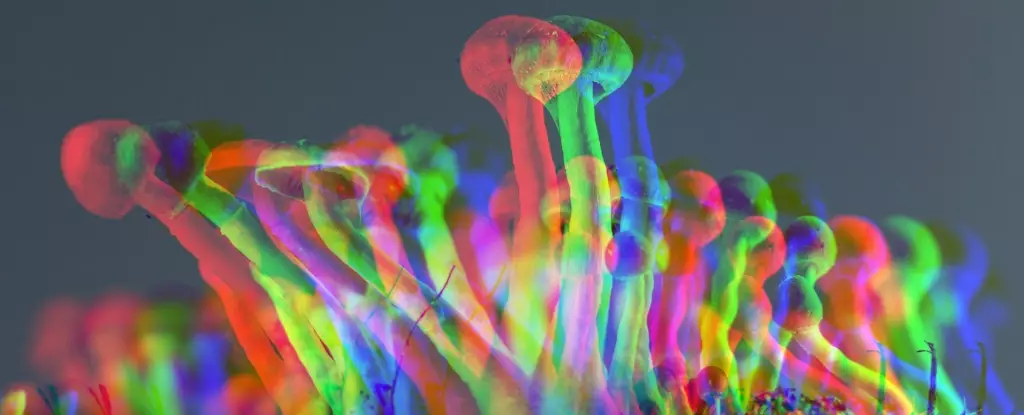
Traditionally celebrated for its mind-altering effects, psilocybin has long been associated with spiritual experiences, self-discovery, and therapy for mental health issues like depression and anxiety. However, recent groundbreaking research is pushing the boundaries of our understanding by suggesting that this psychedelic compound might hold the key to extending lifespan and enhancing health in aging populations. This pivot from mental health treatment to biological rejuvenation marks an exciting and provocative shift, challenging the notion that psychedelics are solely tools for therapy or recreation. It invites us to consider psilocybin—not merely as a mind-expanding substance but as a potential biological agent that influences the foundational processes of aging itself.
Scientific Evidence Hidden in Cells and Mice
The recent study conducted by teams from Emory University and Baylor College of Medicine offers compelling preliminary evidence that psilocybin could influence aging at the cellular and organismal levels. The researchers experimented with human cell cultures, specifically skin and lung fibroblasts, and observed their progression toward senescence—a natural, inevitable process of cellular aging. Remarkably, cells exposed to psilocybin’s active component, psilocin, demonstrated an extended lifespan, with lung cells living 57% longer and skin cells 51% longer than untreated counterparts. These figures are not trivial; they signal a profound impact on cellular vitality, which is a cornerstone of aging.
Parallel experiments with mice further illuminated this potential. Female mice, roughly equivalent in age to 60-to-65-year-old humans, received monthly psilocybin doses. After nearly a year of treatment, a stark difference emerged: 80% of these mice survived, in contrast to just 50% in the untreated group. Though aging signs such as fur quality weren’t rigorously analyzed, observed physical differences suggested healthier, less aged appearances in treated mice. These promising results hint at an exciting possibility—that psilocybin could support not just longevity but an improved quality of life during old age.
Challenging Preconceived Notions About Aging
These discoveries challenge conventional ideas about aging being an unalterable process dictated solely by genetics and wear-and-tear. If a psychedelic drug can extend cellular life and improve survival in model organisms, what does that imply for future therapies? The implications are profound: we may be on the cusp of a paradigm shift where aging becomes modifiable, and age-related decline could be mitigated. Palliative care experts like Dr. Ali Zarrabi emphasize that these findings could pave the way for innovative approaches to human healthspan enhancement, making old age not just longer but significantly better.
What’s particularly intriguing is the potential for psilocybin to influence systemic processes, including inflammation, cellular repair, and neuroplasticity—all factors involved in aging. The idea that a substance historically misunderstood and stigmatized could serve as a foundation for longevity treatments provokes both excitement and skepticism. There remains a long path of rigorous human trials and safety assessments, but the initial evidence fuels optimism that we might soon see a revolution in how we approach aging, health, and life extension.
Leave a Reply