
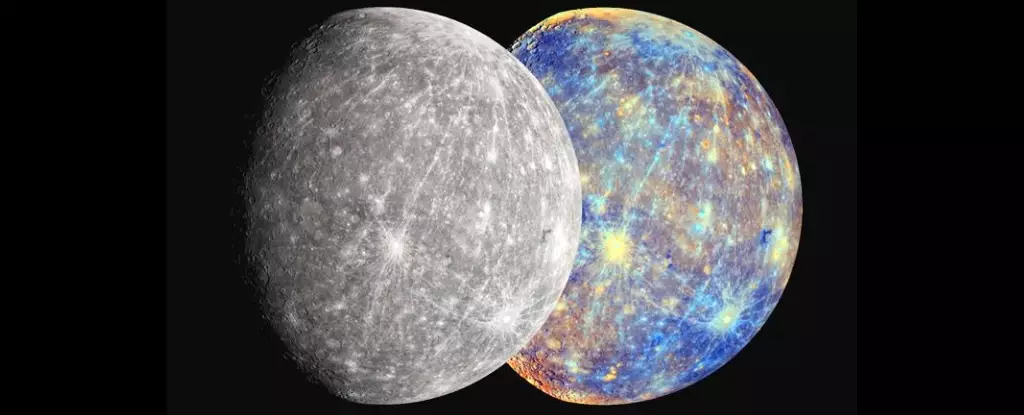
2025 presents a rare and compelling opportunity for skywatchers around the globe, especially in the United States, to glimpse Mercury at its most accessible from Earth. This celestial show isn’t just for seasoned astronomers; it offers an inviting entry point for novices eager to catch a glimpse of the solar system’s closest planet. The key moment arrives in July when Mercury reaches its greatest elongation—a point where the planet is farthest from the Sun in our sky, offering a window of optimal visibility. In the grand tapestry of planetary observations, this short-lived event stands out as one of the best chances in years to observe Mercury with naked eyes or telescopes.
For many, Mercury remains elusive—a faint, shy object that skirts just above the horizon at dawn or dusk, often lost amid the glow of twilight. Yet, the 2025 July elongation breaks through that obscurity, making Mercury significantly easier to spot. Its position during this time is not coincidental; it’s a consequence of its elliptical orbit and the Earth’s vantage point, which aligns just right to make the planet stand out momentarily from the Sun’s glare. For those equipped with even modest binoculars, Mercury’s brightness of around magnitude +0.5 will be a precious sight—an invitation to connect with a world that has fascinated humanity for centuries.
Under optimal viewing conditions, Mercury hovers about 10 degrees above the western horizon approximately 30 minutes after sunset, a delicate patch of sky where the evening’s theatrics unfold. This is no coincidence; planetary elongations follow a calculated rhythm, and for Mercury, this keenly anticipated brightening phase occurs six times annually. Yet, each occurrence feels special—this is one of just three dusk elongations in 2025, and it’s the most accessible before the planet resumes its usual reclusiveness.
The Unique Challenges and Rewards of Observing Mercury
Despite its occasional brightness, Mercury remains notorious among amateur astronomers for its fleeting appearances and challenging viewing angles. The planet’s orbit and the inclination of the ecliptic plane cause its position relative to the horizon to vary significantly over the year. When Mercury reaches greatest elongation, its proximity to the Sun in the sky can create a dilemma—an atmospheric obstacle for observers in higher latitudes or urban environments with light pollution. Moreover, the planet’s small apparent size, often only a fraction of an arcsecond when viewed through telescopes, demands patience and precise timing to appreciate fully.
Though Mercury’s size and proximity to the Sun have been limitations historically, advances in observational tools and dedicated planetary missions have transformed our understanding of this infernal world. After all, what makes Mercury so intriguing isn’t merely its visibility but its dynamic nature. It exhibits a lithium tail, a rare phenomenon for rocky planets, and even a sodium ion exosphere carried away by solar winds, creating a subtle, comet-like glow that amateur astronomers have successfully captured.
From the amateur to the professional realm, the upcoming observation window promises a chance to observe Mercury’s changing phases as it transitions from viewing at greatest elongation to a crescent shape, growing larger and more striking as it approaches inferior conjunction at month’s end. While direct observation of Mercury’s surface features is limited due to its small size and proximity to the Sun, the planet’s contrasting crescent shape through binoculars or telescopes can be mesmerizing—a reminder of the celestial dance that occurs just beyond the reach of our naked eyes.
Beyond Observation: The Broader Celestial Context of July 2025
This year’s planetary conjunctions and celestial events add layers of richness to Mercury’s July apparition. Notably, Mercury will pass near the Beehive Cluster (Messier 44) on July 2—a spectacular pairing that can be appreciated through binoculars, offering a perfect opportunity to combine a star cluster with planetary observation. On July 4th, as Americans celebrate Independence Day with fireworks, skywatchers can enjoy their own “fireworks” in the sky, with Mercury illuminating the early evening sky alongside the fading afterglow and distant sparkles of human-made explosions.
Another compelling aspect of July 2025 is the interaction between Mercury, Mars, and the Moon, which all align in a rare triple conjunction on October 23. Such alignments are not just pretty pictures; they’re opportunities for enthusiasts to deepen their understanding of celestial mechanics and planetary motions.
Additionally, the International Space Station’s extended visibility during early July provides a modern terrestrial link to the heavens—its bright, rapid passes crossing the sky during full illumination remind us that humanity’s journey into space continues in tandem with our exploration of the cosmos.
Most excitingly, in late July, the occultation of the Pleiades by the waning crescent Moon over North America showcases the poetic beauty of celestial choreography—an event that combines the phenomena of lunar phases, star clusters, and planetary positioning, creating a spectacle that’s both visually stunning and intellectually profound.
Why Mercury Deserves Your Attention in 2025
Mercury’s elusive nature has long inspired awe and curiosity, and every good observer recognizes that it’s not merely about seeing a tiny dot in the sky but about appreciating the planetary stories encoded in its orbit and characteristics. The 2025 elongation is more than an observational window; it’s an invitation to rethink how we see our nearest planetary neighbor.
The research and missions dedicated to Mercury—like NASA’s MESSENGER and JAXA/ESA’s BepiColombo—continue to peel back layers of mystery surrounding this innermost world. The fact that recent discoveries include a tail-like sodium exosphere highlights that Mercury is a dynamic, evolving world—not just a rocky remnant orbiting the Sun. These scientific strides make observing Mercury in 2025 all the more meaningful, connecting amateur skywatchers with cutting-edge planetary science.
Whether you’re an enthusiast chasing your first glimpse or a seasoned astronomer marveling at the universe’s mechanics, Mercury’s 2025 greatest elongation offers a compelling reason to look up. It’s about more than just a bright dot—it’s about engaging directly with the complexities and wonders of our solar system, and recognizing that even the most elusive worlds can reveal their secrets when conditions are right. This summer, set your sights low on the western horizon and prepare for a celestial encounter that will invigorate your appreciation for the cosmos.
Leave a Reply