
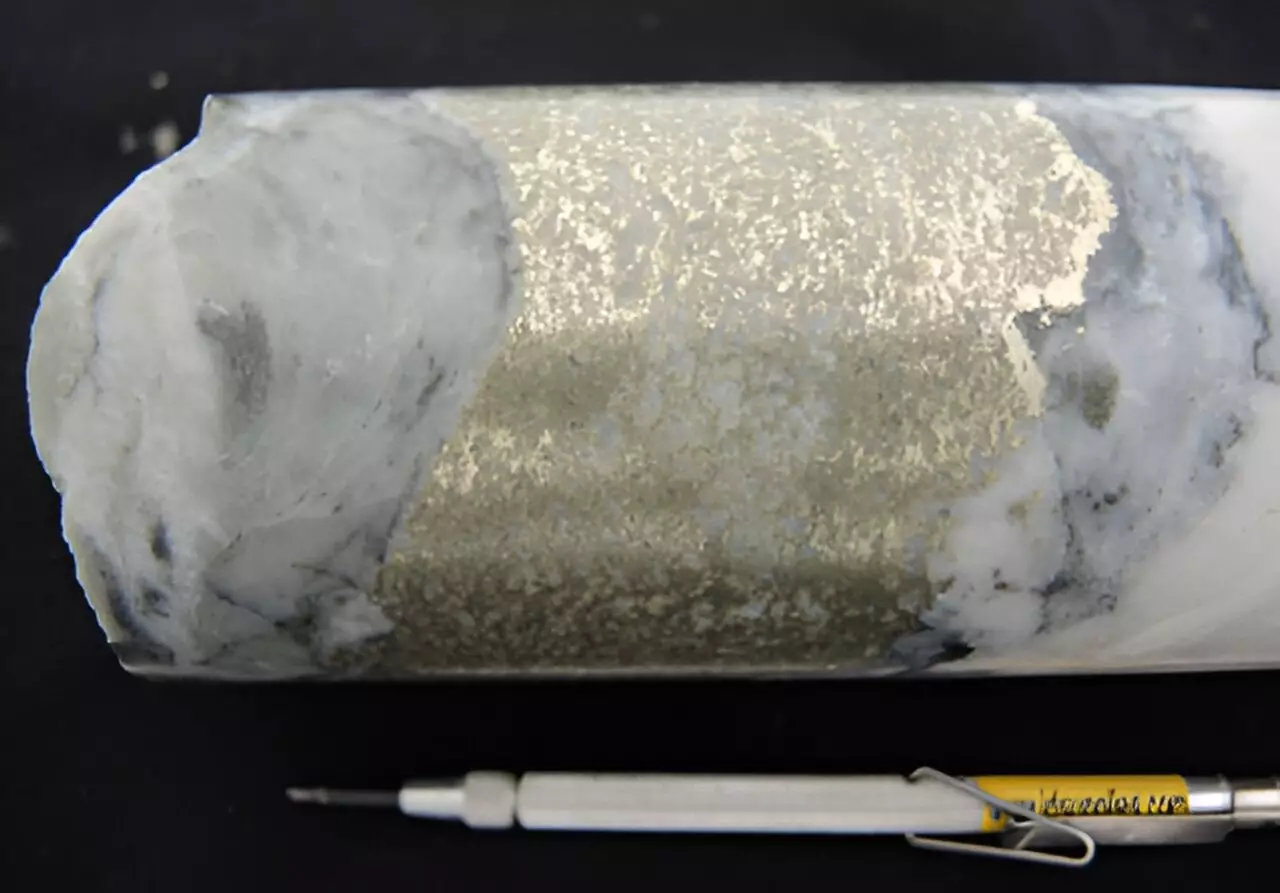
Gold’s allure has persisted throughout history, symbolizing wealth and power. Yet, despite centuries of mining, the true origins of gold remain partially shrouded in mystery. Traditional theories have largely viewed gold deposits as a product of crustal magmatic processes or hydrothermal activity within terrestrial settings. However, recent scientific breakthroughs challenge this paradigm by unveiling an entirely different mechanism—seawater involvement in gold genesis. This discovery compels us to rethink where gold can be found, suggesting that the vast and largely unexplored oceanic crust might harbor enormous reserves. Such a perspective not only broadens the horizon for mineral exploration but also underscores the importance of understanding Earth’s geological history. Recognizing that seawater, a ubiquitous and abundant liquid, can catalyze gold formation opens up new avenues to tap into previously overlooked natural resources.
The Significance of Ancient Submarine Environments
One of the most compelling aspects of this research is its focus on ancient submarine environments. The Brucejack deposit’s rocks, dating back to the Early Jurassic period, exemplify an era when oceanic island arcs thrived beneath the waves. These settings, previously dismissed as inaccessible or irrelevant for mineral deposits, now emerge as critical sites for gold formation. When seawater interacted with volcanic and sedimentary rocks deep within the Earth’s crust, it induced chemical reactions that converted dissolved gold into solid veins. This process, surprisingly, is guided by the chemistry of seawater itself—specifically, sodium ions—which serve as the catalysts for gold nanoparticle aggregation. Understanding these conditions helps us appreciate the dynamic and fluid nature of Earth’s geological processes, where oceanic environments play a pivotal role. It’s a stark reminder that to truly understand Earth’s mineral wealth, scientists must look beneath the surface, into the depths of the seafloor, where many secrets remain hidden beneath layers of sediment and basalt.
Implications for Sustainable Mining and the Green-Energy Transition
The potential of oceanic gold deposits carries profound implications beyond scientific curiosity. As the world pivots toward sustainable energy and technologically advanced applications, the demand for critical minerals like gold surges. Traditional land-based mining, often associated with environmental degradation, low-grade ore processing, and social conflicts, is increasingly viewed as unsustainable. In contrast, submarine mineral deposits could be a game-changer. If high-grade gold veins can form naturally within the seafloor’s volcanic and sedimentary layers—as this research suggests—then the ocean may hold a treasure trove of readily accessible resources. Extracting these deposits, however, requires innovation and responsible practices, but the payoff could be significant: vast amounts of high-quality gold with a lower environmental footprint. Such deposits could satisfy global demand while lessening the ecological costs associated with terrestrial mining. Moreover, given the critical role of gold in electronics, renewable energy technologies, and medical devices, unlocking oceanic resources becomes an urgent priority for a sustainable future.
Challenging Conventional Wisdom and Pioneering a New Era of Exploration
This research disrupts century-old notions of mineral formation, emphasizing seawater’s central role—a factor that has often been overlooked. The analogy that gold nanoparticles behave like proteins clumping in sour milk underscores the complexity of nanoscopic interactions within Earth’s crust. By advancing high-resolution geochemical techniques, scientists are now able to decode subtle chemical signatures that reveal the fingerprints of seawater-triggered mineralization. Such insights propel the field into a new era, where the focus shifts from superficial surface deposits to deep-sea and crustal formations. This shift demands not only technological innovation but also a reevaluation of exploration strategies. Governments, industry stakeholders, and researchers must collaborate to develop sustainable extraction methods, acknowledging that the ocean’s depths represent a vast, untapped frontier. The recognition that oceanic crust may be a significant reservoir for critical minerals signifies a paradigm shift—one that could redefine resource management and geopolitics for decades to come.
Assessing the Promise and Challenges Ahead
While the potential of oceanic gold deposits is tantalizing, it is important to approach this revelation with a critical eye. The practicalities of seabed mining involve considerable hurdles: technological, environmental, and regulatory. Deep-sea extraction is inherently complex, requiring advanced robotics, environmentally sensitive protocols, and international legal frameworks to prevent ecological harm. Moreover, the financial costs associated with underwater exploration and mining are significant, and the economic viability must be thoroughly analyzed. Nonetheless, the scientific evidence supports a compelling case: Earth’s oceanic crust might be a treasure chest of critical minerals, awaiting responsible unlocking. Investing in research and development now can ensure that we harness this potential sustainably and ethically, transforming an academic breakthrough into a tangible solution for the future’s resource needs.
This new understanding compels the mineral industry and policymakers to think differently about Earth’s resources. The seas, far from being merely the foundations of marine ecosystems, could become the next frontier of mineral extraction—if we approach this opportunity with respect, responsibility, and innovation.
Leave a Reply