
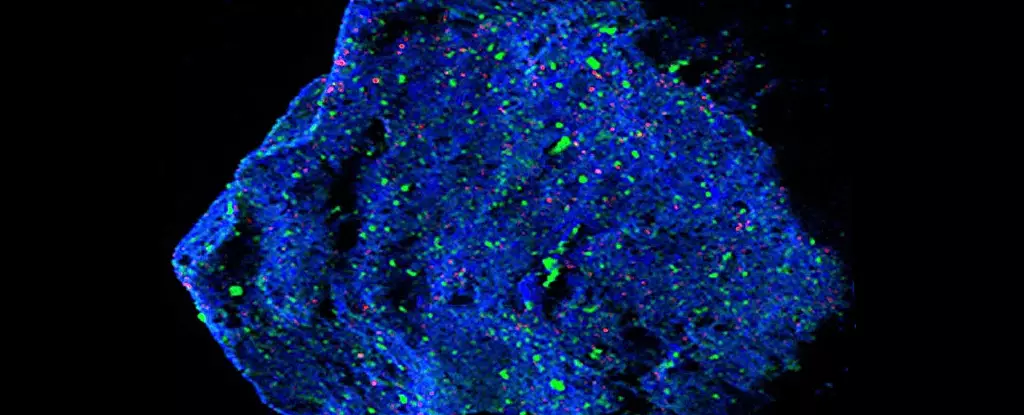
In the vast, silent void of space, tiny fragments of celestial history travel millions of miles before reaching Earth. Among these cosmic remnants, asteroid Ryugu stands out as a remarkably preserved relic from the early days of our Solar System. The samples brought back by Japan’s Hayabusa2 mission in 2020 offer a rare window into planetary formation, chemical evolution, and perhaps even the origins of life itself. The recent scientific revelations surrounding Ryugu’s minerals are not just incremental discoveries; they challenge existing notions and open pathways to understanding how our cosmic neighborhood was assembled.
What makes Ryugu extraordinary is its pristine condition. Unlike Earth, its surface has not been ravaged by geological activity, tectonic shifts, or weather; it has remained relatively untouched for over four billion years. This means the samples carry an unaltered chemical record of the primordial universe, providing insights that terrestrial geology simply cannot. The tiny grains extracted—amounting to just a few milligrams—are truly treasures in the scientific pursuit of knowledge, allowing researchers to analyze compositions that predate Earth’s own formation and subsequent planetary upheavals.
The core of this breakthrough is the advanced use of non-destructive X-ray imaging techniques. These methods enable scientists to probe both the outer surface and the internal composition of the precious grains without compromising their integrity. Traditional chemical analysis might risk contamination or destruction of rare samples, but the innovative approach used in this research preserves these cosmic messengers for future exploration. This meticulous methodology ensures that each piece of data—no matter how small—can yield maximum information about the mineralogical and chemical diversity within Ryugu.
One of the most gripping discoveries relates to the complex mineralogy of the asteroid, particularly the presence of phosphorus in multiple forms. Phosphorus, an element fundamental to life on Earth, was found not only in the form familiar in biological tissues—like bones and teeth—but also as a rare phosphide mineral unknown on Earth. The identification of hydrated ammonium magnesium phosphorus (HAMP), a crystalline mineral akin to Earth’s struvite but with a distinct extraterrestrial signature, is an astonishing find. Struvite’s strong ties to biological processes hint at tantalizing questions: could the building blocks of life have an extraterrestrial origin? Was the chemical soup of the early Solar System replete with elements and minerals that could have jumpstarted biological activity on Earth?
This discovery is more than just chemical curiosity; it challenges the assumption that life’s essential ingredients are exclusive to Earth. HAMP’s presence elevates the possibility that key elements for life’s emergence—such as phosphorus—might have been delivered from space, seeding early Earth with the requisite components for biological evolution. While scientists remain cautious, the implications are profound: the origins of life might be intertwined with the chemical richness of ancient celestial bodies, of which Ryugu is a pristine exemplar.
Furthermore, the detection of unique minerals like selenium, manganese, iron, sulfur, silicon, and calcium paints a complex tableau of chemical reactions and planetary processes that occurred billions of years ago. These elements and compounds hint at the diverse environments within asteroids like Ryugu—areas of chemical exchange, mineral formation, and perhaps even energy transfer. Each piece of elemental puzzle advances our understanding of asteroid formation, migration, and their roles as carriers of prebiotic chemistry. The fact that these minerals are preserved in such undisturbed form elevates Ryugu to a position of cosmic significance, akin to a natural museum of the early solar system.
Some scientists view these results as a call to rethink the narratives of planetary origins and life’s cosmic ubiquity. If the building blocks of life were present in primordial asteroids, it begs the question: how many other planetary systems are similarly equipped, and what are the odds that life could have a cosmic, rather than an Earth-bound, genesis? The ongoing study of Ryugu’s minerals is not merely about understanding a distant asteroid; it’s about deciphering the universal story of how planets and potentially life itself come into being amid the chaos of the universe.
In essence, the detailed chemical insights gained from Ryugu serve as a reminder of the delicate, interconnected dance of cosmic forces that shaped our existence. As researchers peel back layers of mineral history from these tiny grains, they are not only reconstructing the past but fueling the imagination about our place in the universe. The narrative woven from these minerals suggests that the origins of life, the grand architecture of our Solar System, and the cosmic processes that forge worlds are deeply interconnected—written not just in the stars, but in the silent, aged minerals of distant asteroids like Ryugu.
Leave a Reply