
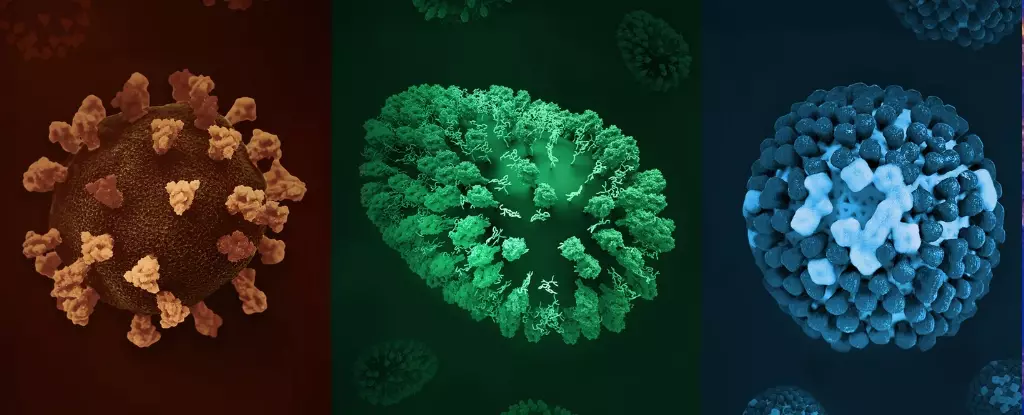
In an era defined by pandemics and global health crises, grasping the fundamental principles of how diseases spread is no longer just a scientific endeavor but a societal necessity. The concept of R0, or the basic reproduction number, acts as an invisible gauge of an infectious agent’s potential to ignite outbreaks and sweep through communities. While media narratives often dramatize pathogens as either unstoppable monsters or benign threats, a nuanced understanding reveals that the true power lies in their transmission dynamics and our collective response.
The R0 is more than a statistic; it is a window into the infectious potential embedded in microscopic microbes. Diseases with high R0 values, such as measles or pertussis, serve as stark reminders of how quickly something seemingly small can escalate into a runaway epidemic. A single unvaccinated individual with measles can spark hundreds of new cases within a matter of weeks. This reality underscores the critical importance of vaccination programs, public health infrastructure, and community awareness in curbing transmission. Conversely, illnesses like tuberculosis exemplify diseases with a low R0 but profound treatment challenges, showing that infectivity isn’t the sole factor determining danger.
In essence, R0 serves as an epidemiological compass, guiding health authorities and individuals alike in their preventive strategies. Recognizing that some diseases spread with alarming ease while others linger quietly teaches us that containment relies heavily on behavioral and policy decisions. It is worth noting that a disease’s R0 is not fixed — it fluctuates with population density, hygiene standards, and social behaviors. In densely packed settings, tuberculosis or influenza can become more virulent options for transmission. This dynamic nature means that our strategies must be adaptable, emphasizing the importance of understanding not just the microbe but the environment that fosters its spread.
The Reality of Virulence and Infectiousness: More Than Just Numbers
While the R0 provides a useful framework, it should not breed complacency regarding low-infectivity diseases. Conditions like leprosy or Middle East respiratory syndrome (MERS) have R0 values below one, suggesting they aren’t likely to cause widespread outbreaks. However, these diseases often carry a heavy burden due to their severity, long incubation periods or difficulty in treatment. For instance, leprosy’s slow progression and social stigma have historically led to misinformation and neglect, despite its low transmission rate.
The impact of these diseases extends beyond raw numbers. Ebola, for example, is highly lethal but spreads predominantly through direct contact with bodily fluids, making its R0 lower but not its threat negligible. Its high fatality rate and potential for overwhelming healthcare systems are compounded by transmission pathways that demand careful management and isolation protocols. This illustrates an important point: infectivity is just one facet of pathogenic danger. The illness’s severity, diagnostic challenges, and societal implications shape its true risk profile.
An overemphasis on R0 alone can be misleading. For instance, COVID-19’s variable R0 — ranging from 8 to over 12 in some variants — highlighted how evolving viral properties and human behaviors alter transmission dynamics. Yet, the pandemic also revealed that preventive measures, such as mask-wearing, social distancing, and vaccination, effectively lower the effective reproductive number (Rt), demonstrating our agency in controlling these microscopic threats. This interplay suggests that public health measures can tilt the balance, transforming seemingly unstoppable pathogens into manageable risks.
Protection Beyond Vaccination: Community, Hygiene, and Education
Vaccination programs have undeniably revolutionized our capacity to fight contagious diseases. They provide herd immunity, shielding vulnerable populations unable to receive vaccines due to age, allergies, or immune suppression. The resurgence of measles, driven by declining vaccination rates, starkly illustrates what happens when herd immunity erodes. Diseases that once seemed under control can re-emerge, turning the clock back decades in public health progress.
However, vaccination alone is insufficient. The battle against infectious diseases also hinges on enhanced hygiene practices, early detection, effective quarantine systems, and widespread education. Simple measures like handwashing, disinfecting surfaces, and cautious social interactions form the frontline defenses against fomites and airborne pathogens. Especially important is public literacy — understanding how viruses and bacteria spread creates empowered individuals who can make safer choices.
Furthermore, addressing misinformation is pivotal. Vaccine hesitancy fueled by false narratives hampers collective immunity and prolongs outbreaks. As the COVID pandemic revealed, trust in scientific expertise and transparent communication are vital in mobilizing communities. It is a collective effort: health authorities, governments, scientists, and individuals all share responsibility for shaping a resilient societal fabric that can withstand microbial threats.
Adapting Our Strategies in a Changing World
In a world increasingly interconnected through travel, trade, and digital communication, infectious diseases can transcend borders rapidly. This reality compels us to rethink how we approach disease management. Monitoring R0 in real-time, deploying targeted vaccines, and improving healthcare infrastructure are ongoing tasks that demand global collaboration.
A critical insight is that infectious diseases are not static enemies; they evolve, adapt, and exploit societal vulnerabilities. The rise of drug-resistant tuberculosis and variants of COVID-19 exemplifies the ongoing arms race between human innovation and microbial evolution. Our response must be equally dynamic, emphasizing research, adaptability, and global solidarity.
Ultimately, the power to prevent or mitigate infectious disease outbreaks resides partially in microscopic worlds but largely in our collective choices. Understanding the principles behind R0 and transmission pathways empowers us to implement strategies that not only save lives but also preserve societal stability in an era where microbes are more active than ever. Mastering this knowledge must be a priority — because in the war against invisible enemies, awareness is our strongest weapon.
Leave a Reply