
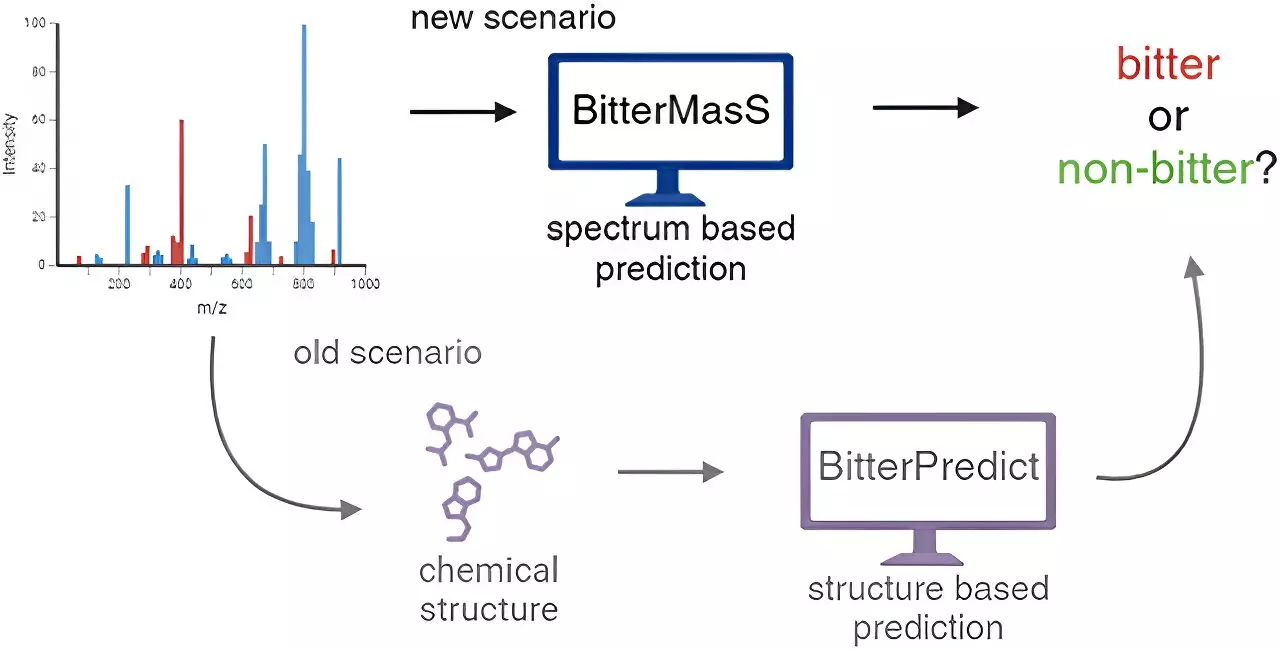
BitterMasS, a novel tool utilizing mass spectrometry, has emerged as a game-changer in the field of taste prediction. Developed through interdisciplinary collaboration, this tool offers a level of precision and efficiency that surpasses traditional methods. With its wide-ranging applications in food science, pharmaceuticals, and beyond, BitterMasS is set to revolutionize how we perceive bitterness in compounds.
Challenging Traditional Methods
Unlike traditional approaches that rely on structural data to predict bitterness, BitterMasS can predict bitterness in compounds without prior knowledge of their chemical structures. This advancement is significant as it covers a larger portion of the metabolome, offering a more comprehensive understanding of taste perception.
In internal tests, BitterMasS demonstrated remarkable precision and recall rates using a dataset of over 5,400 experimental mass spectra of bitter and non-bitter compounds. The tool also showed robust performance in external validation, accurately identifying bitter compounds without structural information. These findings highlight the potential of BitterMasS to streamline compound screening processes in various industries.
Prof. Niv, the lead researcher behind BitterMasS, believes that this tool represents a critical shift in taste prediction. By leveraging mass spectrometry data, researchers can now predict bitterness directly and efficiently, leading to new discoveries in health-promoting compounds and enhanced food processing techniques. BitterMasS is not only a tool for predicting bitterness but also a versatile tool capable of monitoring bitterness changes over time, providing valuable insights into food quality and safety.
Interdisciplinary Collaboration and Technological Innovation
BitterMasS stands as a testament to the power of interdisciplinary collaboration and technological innovation in advancing our understanding of taste. This tool offers practical applications in drug development, metabolomics, and various industries beyond food science. Its implications extend far beyond the lab, potentially reshaping how we perceive and utilize bitter compounds in our everyday lives.
Leave a Reply