
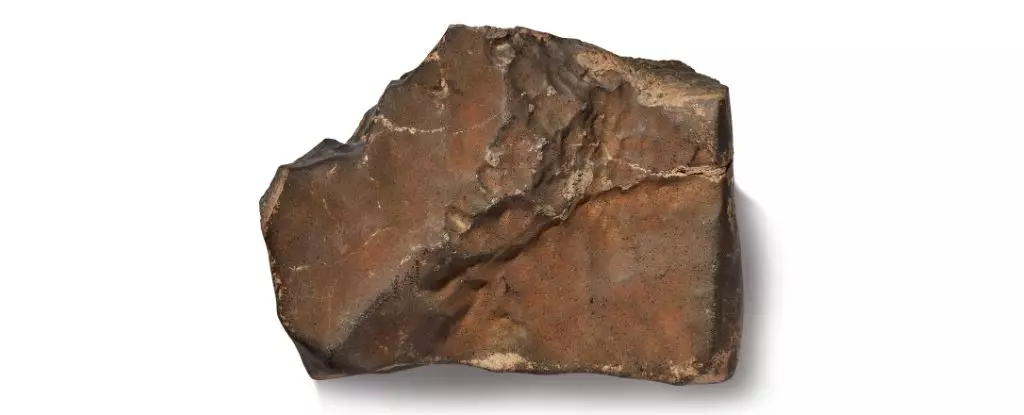
In late 2023, a remarkable celestial object made headlines—not only for its scientific significance but also for its staggering price tag. Sotheby’s in New York auctioned off a colossal Martian meteorite weighing 25 kilograms, fetching a record-breaking $5.3 million. This isn’t just a hefty rock; it’s a tangible piece of extraterrestrial history, having traveled through the void of space before crashing into Earth’s Sahara desert. Its size and rarity make it an extraordinary specimen, signaling humanity’s ceaseless curiosity about our neighbors in the cosmos.
However, behind this captivating story lies an undercurrent of controversy. The meteorite’s journey from the desert sands of Niger to an affluent auction house unveils a complex web of legal, ethical, and geopolitical issues. While collectors and investors see this as an opportunity for profit and prestige, the involved authorities and scientists view it as a potential case of illicit trafficking, threatening to undermine our collective celestial heritage.
Legal and Ethical Minefields
Ownership of extraterrestrial rocks is less straightforward than one might imagine. Different jurisdictions establish varying rules about who owns a meteorite once it lands; in some cases, the landowner claims rights, while in others, national laws dominate. Niger, the site of the meteorite’s discovery, considers such fragments part of its cultural patrimony—an invaluable national resource that should remain under state protection. The country’s government swiftly responded to the sale by suspending exports of meteorites and precious stones, signaling its assertion of ownership rights and concern over potential illegal trading.
Sotheby’s maintains that it adhered to correct international procedures, claiming the meteorite was exported lawfully. Yet, critics, including paleontologist Paul Sereno, argue that the meteorite likely left Niger illegally. This skepticism stems from the anonymized chain of custody—no clear documentation traces the meteorite’s move from the desert to the auction block. The opaque nature of its transactions exposes a bitter truth: precious extraterrestrial objects often tame the allure of profit, overshadowing their scientific and cultural importance.
The case underscores the critical importance of adhering to national laws—particularly those protecting cultural patrimony—while highlighting a global problem: the burgeoning black market for rare and cosmic artifacts. When a cosmic object becomes a commodity divorced from its origin, it risks eroding the scientific and cultural value that makes it unique.
The Scientific Significance and Ethical Dilemmas
Beyond its monetary worth, this meteorite is a scientific goldmine. Known as NWA 16788, its size and composition provide unparalleled insights into Mars’ geological history—knowledge worth billions of dollars to the scientific community. Unlike typical smaller samples, its vastness allows for comprehensive research, potentially unveiling secrets about planetary formation, geological processes, and even the possibility of past life on Mars.
This raises a profound ethical question: should we prioritize scientific discovery over profit? If the meteorite had remained in Niger, accessible to scientists worldwide, the knowledge gained could have advanced humanity’s understanding of the cosmos. Instead, withholding such a significant specimen risks scientific stagnation, especially if it ends up locked away in private collections.
On the other hand, some argue that private collectors and auction houses play a vital role in funding research and conservation. Yet, this perspective often neglects the broader moral obligation to preserve and respect celestial heritage—an obligation that transcends mere monetary gain. Humanity’s collective future depends on access to these rare geological treasures, not just on profit-driven sales.
The Broader Implications: Humanity’s Cosmic Responsibility
This controversy isn’t just about one meteorite; it reflects a deeper tension between commercialization and preservation of our shared cosmic heritage. As space exploration advances and more celestial objects are discovered, the question of ownership and stewardship becomes increasingly urgent.
It’s compelling to consider that these extraterrestrial objects are, in essence, part of nature’s universal library. They carry invaluable stories about our solar system and the universe at large. By auctioning them off as commodities, we risk losing sight of their broader significance—turning what should be a shared human treasure into a private asset.
Furthermore, the case of the Niger meteorite exposes the inconsistency and often inadequacy of international regulations governing space-derived resources. Without stronger, universally accepted legal frameworks, the potential for exploitation and loss of scientific heritage will only grow. Humanity must recognize that these fragments of Mars do not belong to any single nation or individual—they belong to all of us, as part of our cosmic story.
The auction of the Martian meteorite ignites essential conversations about legality, ethics, and our collective responsibilities toward the universe. It challenges us to reconsider what we value more: immediate monetary gains or the awe-inspiring knowledge that these extraterrestrial relics can offer future generations. As we stand at the crossroads of scientific discovery and commercial enterprise, it’s crucial to steer our course with wisdom, ensuring that the treasures from the stars remain a testament to human curiosity and shared heritage.
Leave a Reply