
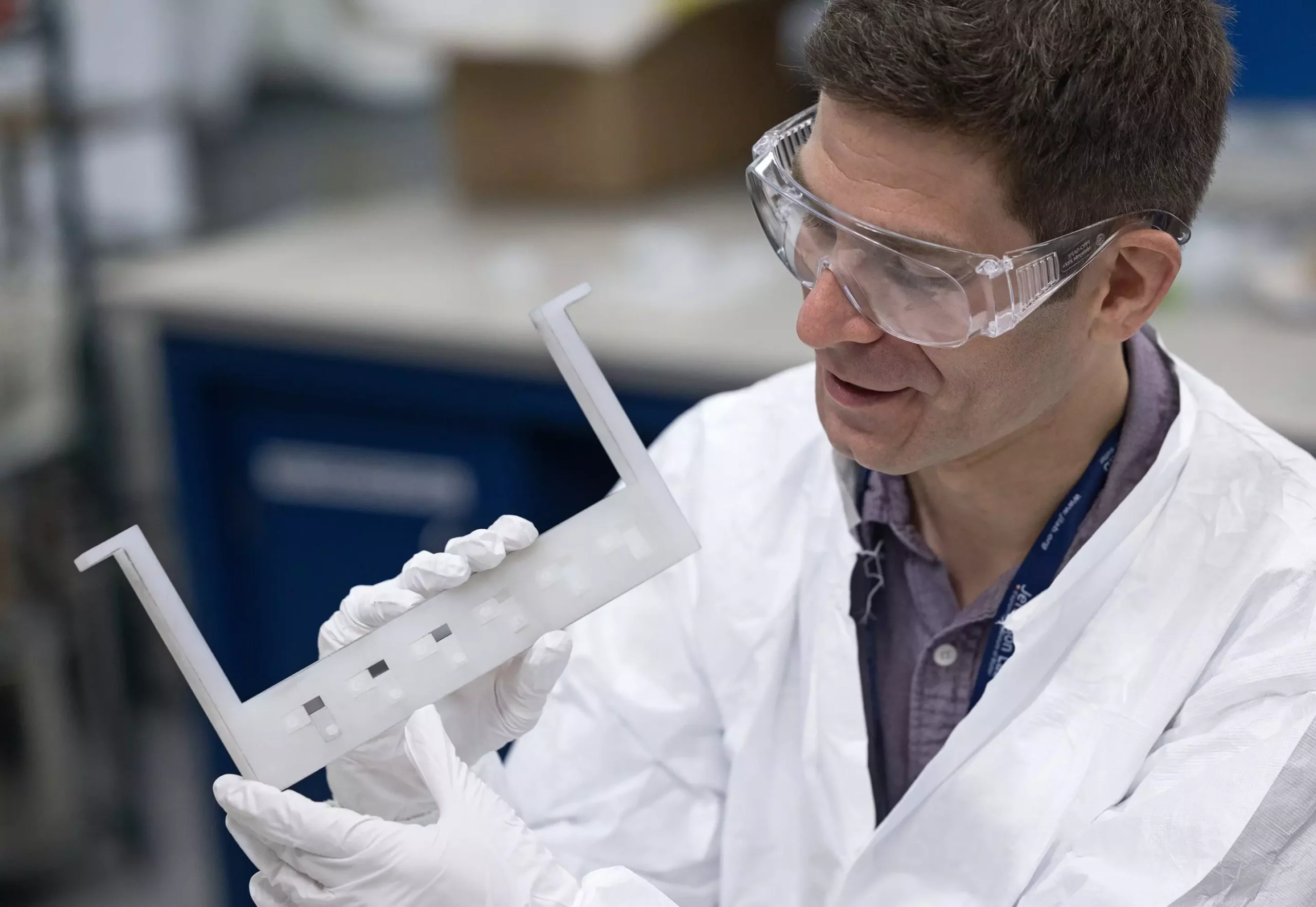
Particle accelerators are marvels of modern physics—massive and complex machines that unravel the deepest mysteries of the universe. Yet their construction and operation come at an extraordinary cost, making efficiency not just desirable but imperative. Among the critical components driving accelerator performance are niobium cavities—ultra-cold, superconducting chambers that propel particles to near-light speeds. Enhancing these cavities’ capabilities can translate directly to reduced costs and more compact accelerators, but the challenge lies in pushing their limits without compromising stability.
The interplay between scientific ambition and financial reality is clear: a 10-mile accelerator is far cheaper and more practical than a 20-mile-long behemoth. This makes every incremental improvement in cavity performance a significant win. The biochemistry of niobium during heat treatment, once a black box, is now at the forefront of scientific inquiry.
Decoding the Role of Oxygen in Niobium Cavities
Niobium is revered for its superconducting properties, which manifest when cooled to extremely low temperatures. Yet its surface chemistry fundamentally influences how well it performs. Historically, labs employing vacuum heat treatments at 300°C have observed surprising improvements in cavity performance but lacked a clear understanding of why. It was through meticulous surface analysis employing secondary ion mass spectrometry that researchers uncovered a subtle yet profound player: oxygen atoms diffusing into the niobium surface layers.
Traditionally, exposure of niobium surfaces to air forms natural oxides. When heated, these oxides don’t simply vanish—they break down and release oxygen atoms that permeate the niobium’s crystal lattice to a depth of micrometers. This atomic migration patterns the cavities’ electromagnetic behavior in unexpected and beneficial ways.
From Observations to Predictive Modeling
What truly sets this research apart is the mathematical model developed to describe oxygen diffusion and its effects on cavity performance. Early studies by the department of energy team provided the first framework for understanding how different baking temperatures and durations influence oxygen migration.
This model transcends descriptive science; it is now predictive. By incorporating variables such as temperature, time, and oxide composition, scientists can foresee how specific heat treatments will alter cavity efficacy. This sophistication extends to modeling the nuanced relationship between oxygen content and superconductivity—a connection previously obscured in accelerator physics.
The model’s ability to interpret and anticipate outcomes from outdated low-temperature baking procedures (120°C for 24-48 hours)—a longstanding puzzle—demonstrates its robustness. These treatments have long been known to enhance accelerating fields, but only now does oxygen diffusion provide a plausible mechanism.
Unraveling the Mystery: Oxygen’s Unexpected Function
One of the most insightful findings is oxygen’s role in suppressing the formation of magnetic vortices within niobium under high electromagnetic fields. Typically, these vortices generate heat and compromise superconductivity, placing a hard limit on the accelerating gradient.
Oxygen-infused niobium appears to inhibit these vortices, allowing cavities to sustain higher fields without resistance-related heating. This revelation could shift entire paradigms in cavity design and preparation—oxygen is not merely a contaminant but a valuable enhancer when precisely controlled.
Impact and Future Possibilities: More Than Just Niobium
With the predictive modeling capabilities well in hand, accelerator laboratories now have the tools to move beyond trial-and-error experimentation. Tailoring oxidation levels deliberately by adding specific oxides and optimizing baking cycles could result in cavities with unmatched reliability and performance.
Moreover, this newfound understanding has ramifications beyond niobium. As research partners at Jefferson Lab explore alternate materials, such as copper cavities coated with thin layers of niobium, insights into oxide dissolution become foundational. This could herald a future where more accessible, cost-effective materials replace bulk niobium, dramatically expanding availability and reducing costs.
Balancing Science and Practicality: The Road Ahead
Niobium cavity fabrication remains an expensive, highly specialized endeavor confined to a few elite facilities worldwide. The work at Jefferson Lab and collaborating institutions is therefore not just academic but deeply practical—each incremental improvement promises significant economic advantages for large-scale accelerator projects.
By turning what was once an unpredictable variable—the oxygen content—into a controllable parameter, this research empowers engineers and scientists with unprecedented foresight. Moving from reactive adjustments to proactive design marks a critical transformative step in particle accelerator technology.
In my view, this work embodies the kind of innovative problem-solving crucial for sustaining big science endeavors. Particle physics will always demand cutting-edge instruments, but controlling microscopic phenomena like oxygen diffusion shows how sometimes the smallest insights produce the largest breakthroughs.
Leave a Reply