
In an era dominated by exponential data growth, the quest for efficient, durable, and scalable storage solutions is more urgent than ever. Conventional techniques for preserving genetic material—primarily freezing—have served scientists well but are riddled with significant drawbacks. Cryogenic storage demands constant energy consumption, substantial financial investment, and is inherently fragile. Maintaining millions of samples in ultra-cold environments is impractical for many regions across the globe, especially in areas with limited infrastructure. This reality underscores the pressing need for innovative alternatives that can enable long-term, safe, and cost-effective preservation of DNA, which today doubles as a powerful medium for digital information storage.
Traditional storage methods also face challenges when it comes to scalability and environmental sustainability. Freezing large quantities of DNA is not only energy-intensive but also susceptible to power outages, equipment failure, and logistical hurdles. As our digital footprint expands—ranging from personal photographs to complex genomes—the limitations of current storage suggest that a paradigm shift is essential. The scientific community increasingly recognizes the potential of DNA as a data storage medium thanks to its extraordinary density and inherent stability, but until now, methods to preserve and retrieve DNA without expensive cold chain logistics have remained elusive.
Introducing a Game-Changing Solution: Amber-Like Polymers for Room-Temperature Storage
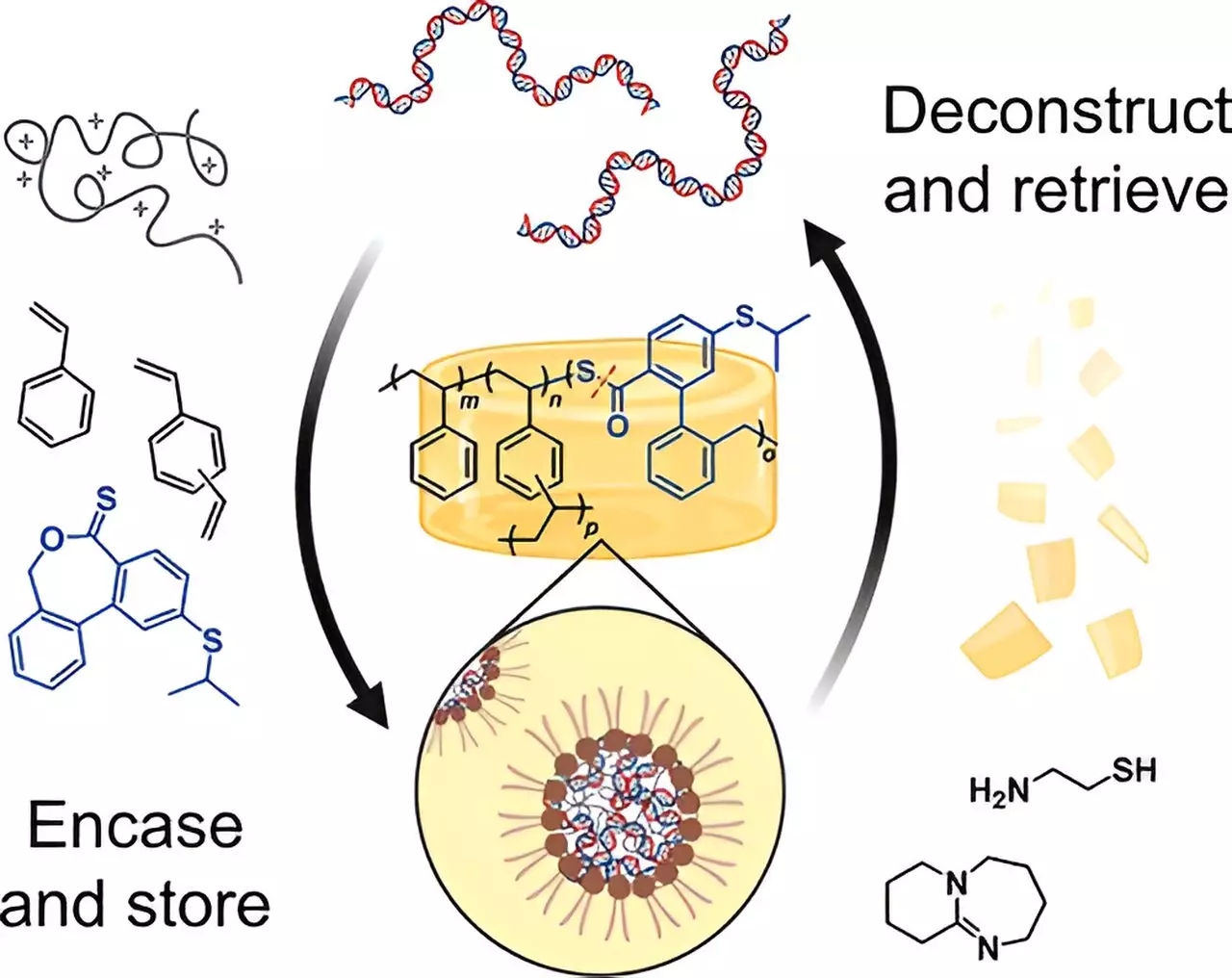
A groundbreaking development from researchers at MIT offers a transformative alternative: a synthetic, amber-inspired polymer capable of preserving DNA at room temperature. This innovation redefines the landscape of DNA storage, unlocking the potential for widespread, accessible, and sustainable long-term preservation. Drawing inspiration from the “Jurassic Park” film, where ancient DNA was preserved in amber, scientists have engineered a liquid-glassy polymer that mimics this natural preservative, but with controllable, engineered features.
Unlike traditional preservation techniques that rely heavily on extreme cooling, this amber-like polymer provides a stable environment for DNA molecules, shielding them from heat, water, and degradation over extended periods. The process is remarkably straightforward: DNA can be embedded into the polymer matrix, protected by a hydrophobic barrier, and later extracted without damage or loss of fidelity. Essentially, this method creates a sealed environment similar to a miniature fossil, where DNA is cradled in a state conducive to long-term stability.
The implications are staggering. By enabling ambient-temperature storage, the need for vast cold storage facilities diminishes. This approach could decentralize biorepository systems, making it feasible for museums, hospitals, and research institutions worldwide to preserve genetic and digital data without exorbitant energy costs. Moreover, the technology aligns with global sustainability goals, reducing energy consumption and carbon footprints associated with massive cold storage infrastructure.
From Digital Data to Genomic Magic: Bridging Biological and Digital Realms
The intersection of biological molecules and digital data is no longer a theoretical frontier but an emerging reality. DNA’s unique capacity to encode digital information—using the four nucleotides as binary-like units—positions it as an ultra-dense, durable, and accessible medium for data storage. For instance, a single teaspoon of DNA could theoretically store all of the world’s digital data, a tantalizing prospect given the ongoing data surge characterized by images, videos, and complex datasets.
This new polymer technology advances this vision by providing a practical method to encode, store, and decode DNA sequences reliably and efficiently. The researchers demonstrated this by encoding iconic data sets—a musical score from “Jurassic Park,” historical documents like the Emancipation Proclamation, and even corporate logos—showcasing the versatility of DNA as a digital vessel. The process of embedding and later retrieving DNA from the polymer was shown to maintain sequence integrity, with no errors introduced during storage or extraction, a critical characteristic for potential application in data archiving.
Furthermore, this method opens doors to future applications in personalized medicine, where individual genomes could be preserved permanently for later analysis, comparison, or even re-sequencing as technology advances. The ability to store entire human genomes stably and affordably could revolutionize medical research, diagnostics, and the development of tailored therapeutic interventions.
The Future of Data Preservation: A Sustainable and Scalable Horizon
The development of this amber-like polymer marks a significant leap towards sustainable data and genetic preservation. As the researchers refine this technology, the potential for creating compact, portable capsules of DNA—easily transportable and resistant to environmental variables—becomes increasingly tangible. They are actively working on optimizing the synthesis process and designing storage capsules for long-term use, possibly in even more durable forms.
This approach is not merely about scientific curiosity; it is a strategic solution to real-world problems. As global populations grow and digital needs expand exponentially, the pressure on current storage infrastructures intensifies. Long-term DNA preservation in a stable, room-temperature polymer could alleviate these pressures, making data storage more resilient, accessible, and environmentally friendly. By providing a scalable method to preserve not just digital files but also biological specimens, the technology bridges the gap between biology and data science, fostering a new era where life and information coexist in durable harmony.
As companies like Cache DNA evolve, incorporating such innovative polymers, we inch closer to a future where storing the essence of life and human knowledge becomes as simple as preserving a snapshot in time—preserved in amber, yet accessible to the future. The true power of this technology lies in its potential to democratize DNA storage, eliminate costly cold chains, and finally enable humanity to archive its collective knowledge and biological history with unprecedented fidelity and sustainability.
Leave a Reply