
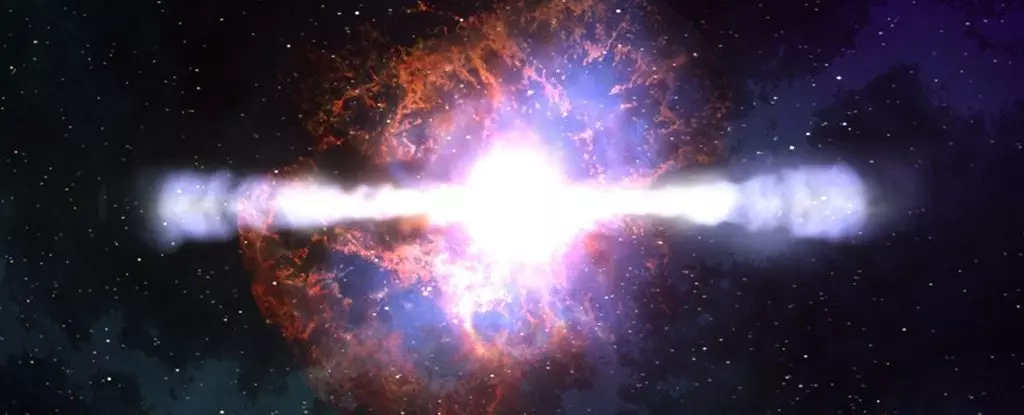
For centuries, the scientific consensus has been that life requires a delicate balance of conditions—primarily warmth, liquid water, and protection from the universe’s lethal radiation. The very fabric of this understanding has been challenged by recent research suggesting that the cosmos may be more hospitable than previously thought. In particular, the role of cosmic radiation, traditionally viewed as a destructive force, could actually serve as a catalyst for life’s emergence and sustenance in some of the most unlikely environments. This paradigm shift compels us to reconsider the criteria for habitability beyond the classic “Goldilocks zone,” opening the door to the possibility that cold, dark worlds could harbor life by harnessing the very radiation that we once thought would obliterate biological chemistry.
Radiolysis: Nature’s Unexpected Energy Source
The key mechanism behind this revolutionary idea is radiolysis—where high-energy particles from space eject electrons from molecules in water or ice, creating reactive chemical species. These reactive molecules can, in turn, provide energy that sustains microbial life in environments devoid of sunlight. Unlike Earth, where life is powered by sunlight, these extraterrestrial ecosystems could thrive purely on the energy produced by cosmic radiation. The notion turns the traditional understanding of life’s dependence on sunlight on its head, suggesting that the universe’s most tenacious microbes might adapt to, or even rely on, ionizing radiation to survive in secluded habitats beneath icy crusts or within subterranean reservoirs.
Implications for the Search for Extraterrestrial Life
This insight dramatically widens the horizons of astrobiology. Planets and moons once dismissed as inhospitable—such as the icy moons of Saturn and Jupiter—are now prime candidates for hosting life. The study highlights moons like Enceladus and Europa, where subsurface oceans could be sustained and energized by cosmic rays penetrating their icy shells. Mars, long considered marginal due to its thin atmosphere and harsh surface conditions, may also harbor underground niches fed by this radiation-driven process. Such environments might house microbial communities, effectively turning cosmic radiation from a biological enemy into an unlikely ally.
A Shift in the Battle for Habitability
This revolutionary concept is not without controversy. Skeptics argue that radiation’s damaging effects might outweigh its potential as an energy source, especially over geological timescales. Still, the possibility that life can adapt to harness even the most destructive cosmic forces challenges the very foundation of planetary habitability models. Instead of seeking only Earth-like worlds, astrobiologists must broaden their scope and envisage worlds where survival hinges on the delicate balance of radiation and chemistry. As this new understanding unfolds, space agencies and scientific explorers will need to recalibrate their search strategies—moving from the simplicity of warmth and oxygen to a more nuanced picture where darkness and radiation could serve as signs of potential life.
In my view, this paradigm shift invigorates the field of astrobiology by emphasizing resilience and adaptability inherent in nature. It encourages us to look beyond our narrow definitions of life’s prerequisites and to appreciate the universe’s inventive capacity to create habitable niches in the unlikeliest corners. The universe, it seems, is more resourceful and resilient than we imagined—turning chaos into cradle for life.
Leave a Reply