
With climate change intensifying the severity and frequency of wildfires worldwide, traditional firefighting methods are no longer sufficient to combat these devastating blazes effectively. Longer, hotter fire seasons threaten not only natural landscapes but also human communities, infrastructure, and economies. In this critical context, innovative solutions are urgently needed to provide preventative measures before wildfires ignite. One such groundbreaking development is the creation of a novel water-enhancing gel designed to serve as a protective barrier against flames. Pioneered by researchers at Stanford, this technology promises to redefine wildfire defense by offering a scalable, effective, and environmentally friendly method of safeguarding vulnerable structures and landscapes.
What makes this gel a significant advancement is its remarkable longevity and fire resistance. Unlike existing commercial gels that evaporate rapidly under extreme heat, the new formulation leverages advanced materials to ensure a robust protective layer that endures well beyond the typical 45-minute window. This extended survival time could allow homeowners, fire crews, and property managers to prepare and respond more effectively, buying critical extra minutes and reducing destruction.
Breaking Down the Science: From Absorption to Insulation
At the core of this innovation is a sophisticated use of super-absorbent polymers—a common component in disposable diapers—engineered to create a versatile fire retardant. These polymers, when mixed with water and sprayed on surfaces, swell into gel-like shields that cling tightly to structures, forming a wet barrier capable of resisting the initial onslaught of flames. However, the real magic lies in what happens when these gels are exposed to intense heat.
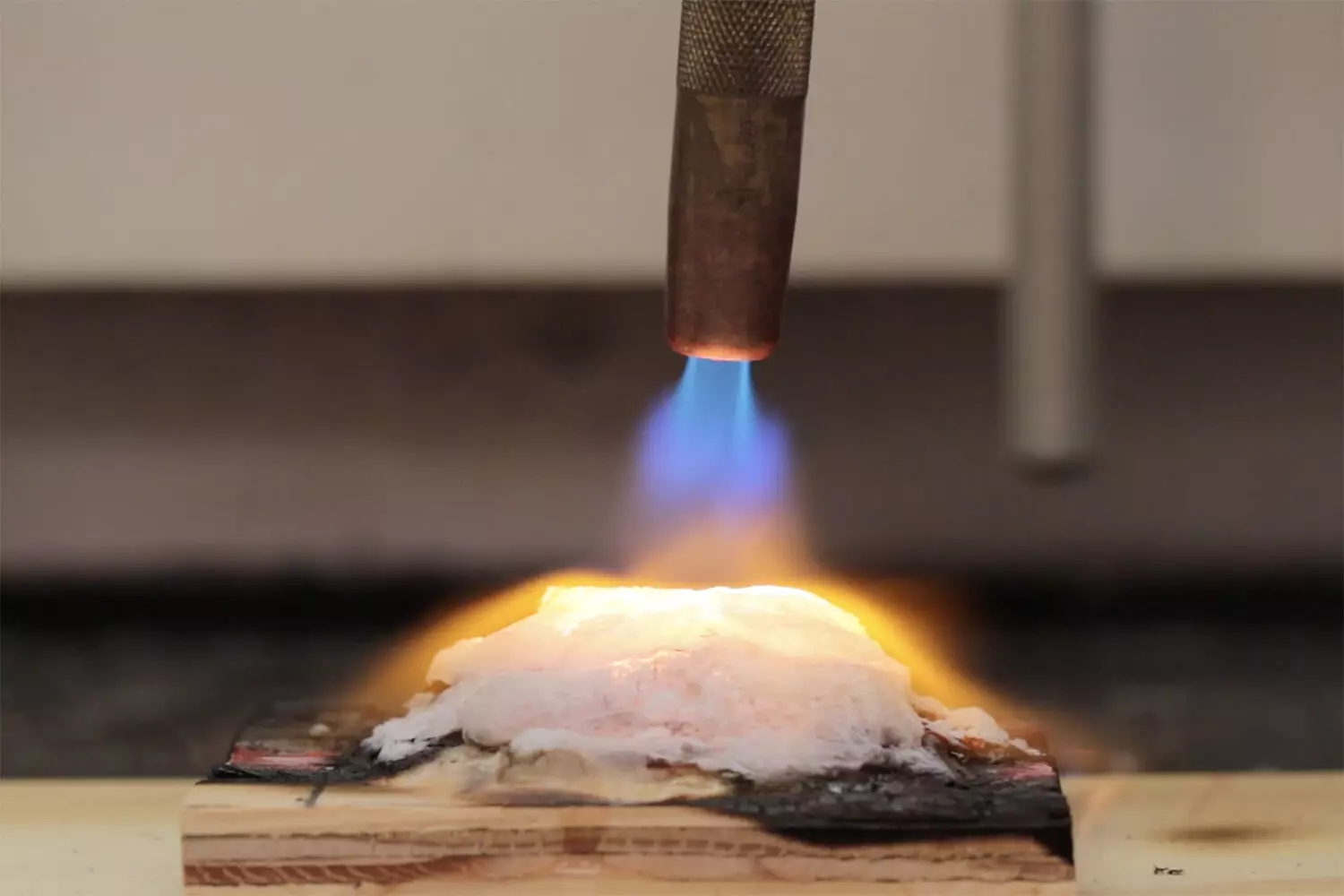
The Stanford team discovered that, under fire conditions, the gel undergoes a transformational process. Once heated, the cellulose-based parts of the gel burn off, leaving behind a structure composed of silica particles. These silica particles assemble into a lightweight, porous foam called an aerogel—a material renowned for its exceptional insulating properties. Aerogels are used in aerospace for thermal protection because they scatter heat effectively and prevent transfer of thermal energy.
This transition from hydrogel to aerogel provides a dual-layer protection mechanism: the gel initially acts as a water-based shield, absorbing heat and keeping surfaces cool, while the resulting silica aerogel functions as a long-lasting insulator that deflects heat even after all the water has evaporated. This insulative foam is highly resistant to fire penetration, scattering heat and shielding the underlying material from sustaining damage.
Empowering Wildfire Defense with Practical Innovation
One of the most impressive aspects of this gel is its performance consistency under real-world conditions. Researchers subjected treated plywood to direct flame from a gas torch—far hotter than typical wildfire temperatures—and observed that the gel layer protected for more than seven minutes before significant charring occurred. In stark contrast, commercial gels failed in under 90 seconds, highlighting the superior durability and fire-resistant qualities of the new formulation.
The potential applications extend far beyond simply spraying properties. The gel can be manufactured in stable, easy-to-handle formats and applied using existing equipment, making it accessible for widespread use in vulnerable communities. When fire threats pass, the gel can be washed away without harming the environment or leaving toxic residues, thanks to its biocompatible components. This aligns perfectly with increasing demands for environmentally sustainable fire management practices.
Moreover, this innovation builds on prior work by the same research team, who previously utilized similar gels to carry fire retardants over long periods, aiding in wildland fire prevention. Their serendipitous discovery—that the gel could transform into a protective foam when exposed to heat—opened new avenues for proactive wildfire mitigation. Years of engineering refinement have now yielded a product that is not only effective but also practical for real-world deployment.
Environmental and Safety Considerations
A common concern with fire retardants and protective gels involves environmental impact and safety. The Stanford team prioritized these considerations, opting for nontoxic components already approved by agencies like the U.S. Forest Service. The gels are designed to degrade naturally, breaking down through microbial activity in the soil, thus reducing long-term ecological footprints.
This focus on environmental sustainability is crucial, given the increasing wildfire frequency and the need to balance protective measures with ecological preservation. The safety profile of the product also extends to human health: the gels are nonirritating and pose minimal risk during application or cleanup.
Addressing the Limitations of Current Firefighting Strategies
Traditional firefighting often relies heavily on reactive measures—firefighters battling flames on the frontlines or using water drops from aircraft. While essential, these methods are reactive and sometimes insufficient for large-scale or fast-moving fires. Prevention, however, has seldom been as innovative or accessible. The Stanford gel offers a proactive approach, enabling pre-emptive protection for homes, critical infrastructure, and fuel sources.
Because the gel can be sprayed on structures weeks before a fire approaches, it creates a passive defense line, reducing the likelihood of ignition or structural collapse. This can allow communities to prepare more effectively, allocate firefighting resources strategically, and potentially reduce the overall damage inflicted by wildfires.
In a broader perspective, investing in such technological advances signifies an evolution in wildfire management—shifting from solely containment efforts to embracing prevention and resilience. As climate change continues to escalate risks, solutions like this innovative gel will become vital components of modern firefighting arsenals, emphasizing foresight over reaction.
—
By critically analyzing this development, it becomes clear that the Stanford team’s work is more than just a scientific breakthrough; it symbolizes a shift in how society can approach wildfires holistically. Their gel exemplifies the potential to merge environmental consciousness with technological ingenuity—an essential combination for safeguarding our communities amid an increasingly fire-prone world.
Leave a Reply