
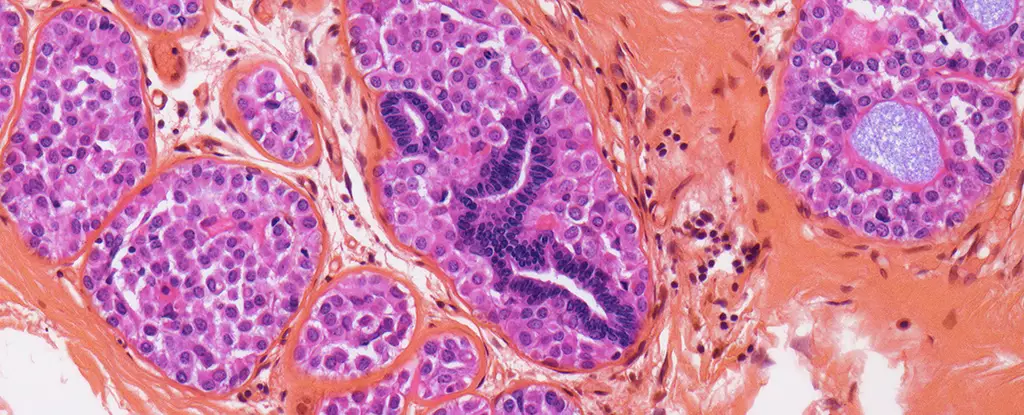
Alzheimer’s disease and breast cancer are two profoundly impactful health issues, each commanding vast global attention. Traditionally, these diseases have been studied independently, focusing on their distinct causes, treatments, and outcomes. However, recent research from South Korea reveals a surprising connection between the two: women who survive breast cancer appear to have a modestly reduced risk of developing Alzheimer’s later in life. This counterintuitive finding invites a fresh perspective on how cancer treatments might influence brain health in unexpected ways. It challenges prevailing narratives and encourages medical researchers to rethink the complex interplay between cancer therapies and neurodegenerative disease risk.
Reevaluating Cancer Treatment’s Cognitive Footprint
It’s well-known that cancer survivors frequently report cognitive issues, often referred to as “chemobrain,” encompassing memory lapses and difficulties with concentration. Such symptoms have understandably raised concerns that cancer treatments might accelerate cognitive decline or predispose survivors to dementia. Yet, the Korean study turned this assumption on its head, showing an 8% lower incidence of Alzheimer’s in breast cancer survivors compared to healthy counterparts during a roughly seven-year follow-up. While an 8% reduction is modest and certainly not a cure-all, its statistical significance—especially among women over 65—underscores the value of looking beyond surface-level expectations when assessing long-term treatment effects.
This finding introduces a paradox: how could treatments known to cause short-term cognitive complaints potentially decrease the risk of Alzheimer’s? The researchers highlight radiation therapy as a likely factor behind this pattern. Radiation’s role in dampening brain inflammation might provide a neuroprotective effect, something that merits deeper mechanistic exploration. Indeed, inflammation is a key driver in the progression of Alzheimer’s, so if radiation therapy modulates neuroinflammation, it could explain this unexpected benefit. This insight broadens the conversation about cancer therapies from merely managing tumors to influencing systemic and neurological health outcomes.
The Role of Research Design and Data Interpretation
Though intriguing, the study’s observational nature means causation cannot be firmly established. The data, derived from health records of over 70,000 breast cancer patients paired with nearly 180,000 controls, show correlation rather than direct proof of a protective effect. Such large-scale epidemiological studies are invaluable for uncovering trends and guiding hypotheses, but they leave open questions about confounding variables. For example, lifestyle factors such as diet, exercise, and mental health—which are known contributors to both Alzheimer’s and cancer—may influence these results.
Additionally, the fact that the risk reduction dissipated over time suggests that any protective effect might be temporary or influenced by the aging process itself. It also prompts inquiry into how treatment timing, cancer stage at diagnosis, and other interventions interplay with cognitive health down the line. These nuances remind us that interpreting medical data demands caution; promising correlations require rigorous randomized trials and biological investigations before reshaping clinical protocols.
Broader Implications: Rethinking Brain Health in Cancer Survivors
The rising survival rates for breast cancer—now exceeding 90% when detected early—mean that an ever-growing population of women are navigating the long-term sequelae of cancer and its treatments. Cognitive well-being is a crucial component of quality of life for these survivors, yet it has often been overshadowed by immediate concerns of oncology and recurrence. The new findings inject a hopeful note into this dialogue. They suggest that some cancer therapies, while initially burdensome, may harbor unrecognized benefits in terms of reducing neurodegenerative risks.
Moreover, the research underscores the urgent need for integrated care approaches that look holistically at survivor health, bridging oncology, neurology, and geriatrics. It challenges entrenched fears around “chemobrain” and urges the medical community not to conflate short-term cognitive impairments with irreversible dementia. Perhaps, rather than fearing breast cancer treatment’s impact on the brain, we should investigate its potential to unlock new strategies for Alzheimer’s prevention.
Looking Forward: Bridging Oncology and Neurology
The study’s authors call for intensified research into the long-term neurocognitive outcomes of cancer survivors. This is a critical direction, as understanding molecular mechanisms by which radiation or other treatments may influence brain aging could open pathways toward novel interventions. Harnessing insights from cancer survival to prevent or delay Alzheimer’s would be a remarkable scientific crossover—one that transforms adversity into opportunity.
In my opinion, this research represents a significant paradigm shift, but also a reminder of science’s complexity. It encourages vigilance against simplistic conclusions and champions multidisciplinary collaboration. We must pursue further, nuanced investigations to discern whether breast cancer treatments can be intentionally leveraged to protect cognition, or if the observed link is a fortunate coincidence shaped by factors yet unmeasured. Either way, acknowledging this unexpected connection enriches our understanding of disease interplay and fuels optimism for future breakthroughs where oncology and neurology intersect.
Leave a Reply