
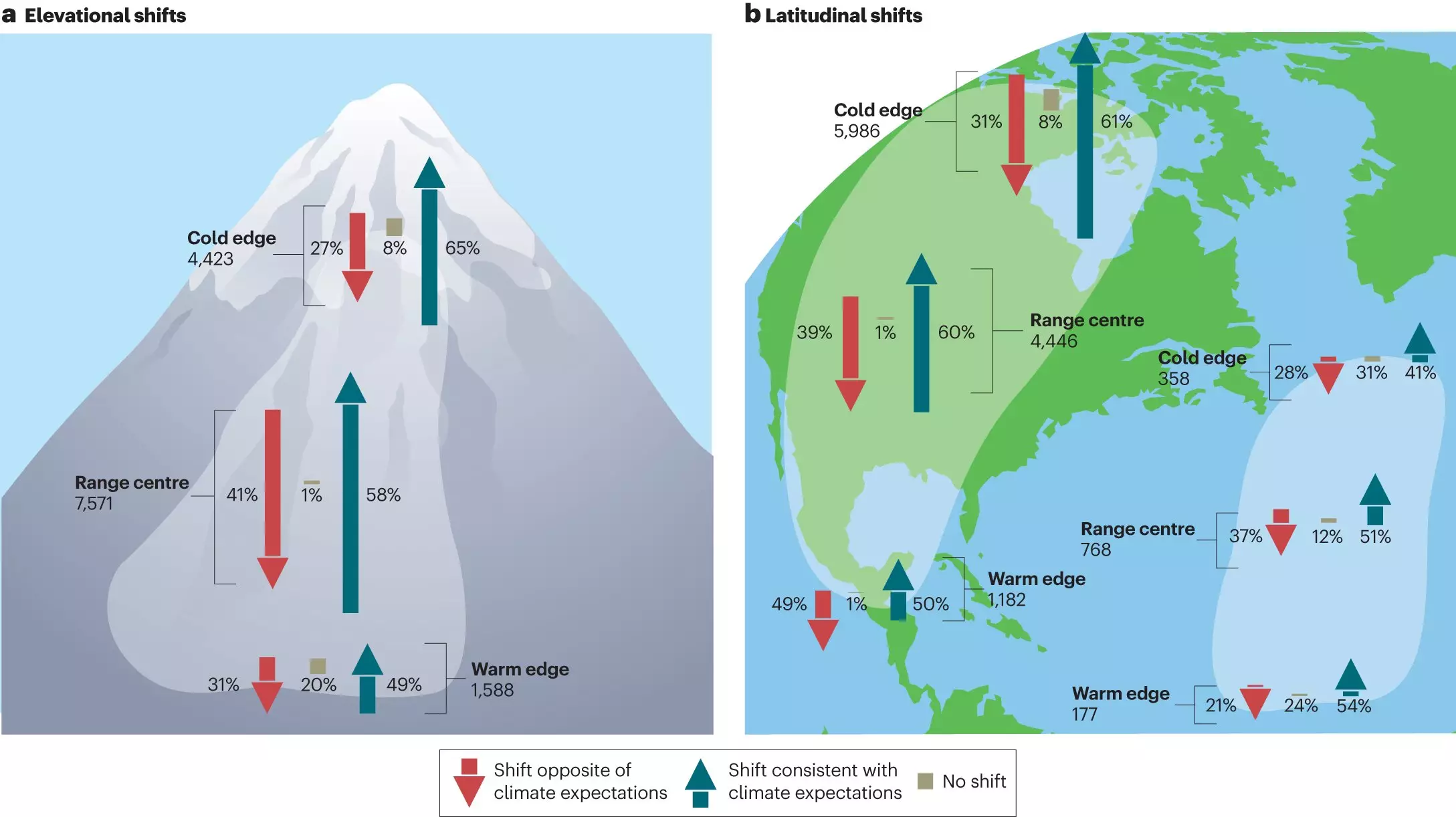
The accelerating pace of climate change has triggered a massive reorganization of ecosystems worldwide, as many species relocate in search of more hospitable environments. This biological reshuffling is not merely an academic curiosity; it has tangible consequences on human health, economies, and conservation efforts. From mosquitoes introducing tropical diseases into temperate regions to fish populations migrating across jurisdictional lines, the ripple effects challenge existing policies and management frameworks that largely assume biological stability. The crucial question is no longer if species will move, but how and when these shifts will occur—and how societies can adapt.
Challenging the Simplistic Temperature Narrative
Recent comprehensive research spearheaded by McGill University offers valuable insights into the drivers behind these migrations. By analyzing data on approximately 26,000 species from the global BioShifts database, scientists found that while a majority (59%) of species tend to move toward cooler environments as predicted by rising temperatures, a staggering 41% do not behave as expected. This discrepancy reveals that climatic warming alone is insufficient to explain the complex patterns of species relocation. Temperature is an important, but far from the sole, determinant of range shifts. The behavior of nearly half the species defies simple thermal logic, suggesting that other ecological and biological variables are at play.
Unpacking the Factors Governing Species Range Shifts
To deepen the understanding of these atypical movements, researchers investigated species-specific and environmental characteristics influencing range changes. For example, a species’ life cycle stage, thermal tolerance, and reproductive rate can significantly impact its ability to colonize new habitats. Likewise, physical landscape features such as barriers, habitat fragmentation, and connectivity mediate movement opportunities. These elements can either impede or facilitate migration corridors. Recognizing these factors is paramount in refining predictive models, enabling scientists and policymakers to anticipate not just whether a species will move, but the trajectory and pace of that movement. Without incorporating such nuanced variables, management and conservation strategies risk being ineffective or misdirected.
The Geographic and Taxonomic Blind Spots in Current Data
One glaring limitation the research highlights is the geographic bias in data collection. Most existing observations come from Europe and North America—regions with pronounced seasonal cycles—while less is known about species dynamics in tropical or arid zones where climatic seasonality differs drastically. Additionally, there is a disproportionate focus on terrestrial vertebrates and insects, leaving marine species and plants underrepresented in global assessments. Given the fundamental ecological differences among these groups, extrapolating findings from one taxonomic or geographic context to another may produce misleading conclusions. This disparity underscores the urgent need to broaden monitoring efforts to filling these knowledge gaps comprehensively.
The Stakes for Human and Ecological Systems
The real-world implications of species redistribution extend beyond ecological curiosity into the domains of public health, economic stability, and biodiversity preservation. The encroachment of disease vectors like ticks and mosquitoes into new territories disrupts healthcare preparedness. Shifts in fisheries influence livelihoods, trade policies, and food security. Conservation plans rooted in static ecosystem assumptions struggle to cope with dynamic species assemblages. Therefore, integrating a multifaceted understanding of species movements into policy and planning is no longer optional—it’s a necessity.
A Call for a More Holistic Approach to Species Monitoring
Ultimately, the McGill-led study serves as a compelling call to action for the scientific community and policymakers alike. Monitoring must evolve beyond simplistic climatic correlations to incorporate species biology, landscape connectivity, and regional climatic idiosyncrasies. Only with such a holistic approach can we hope to develop adaptive, forward-looking strategies that safeguard biodiversity and human well-being amid the unfolding climate crisis. Embracing complexity rather than defaulting to convenient generalizations will be critical for navigating the unpredictable terrain of a changing natural world.
Leave a Reply