
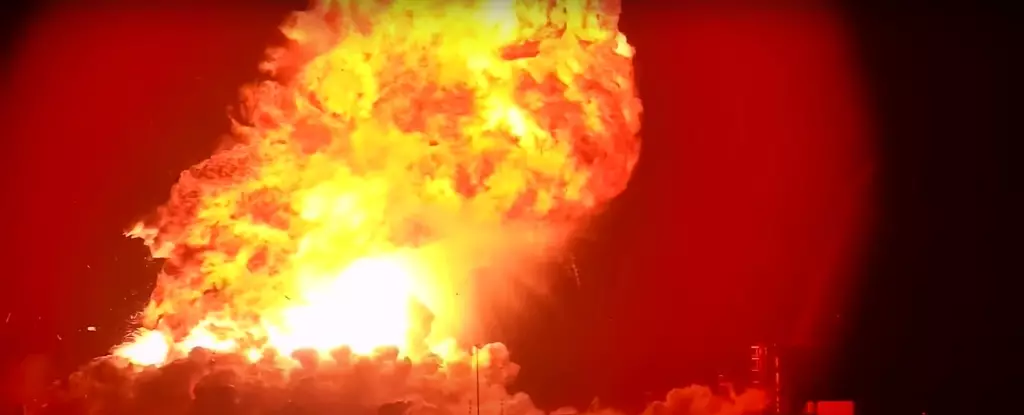
Space exploration is more than a scientific endeavor; it’s a multifaceted pursuit interwoven with the threads of ambition, innovation, and the inevitable setbacks that accompany groundbreaking technologies. Recently, SpaceX encountered yet another challenge when one of its Starship rockets exploded during a static fire test at the Starbase facility in Texas. This incident highlights not only the fragile nature of space technology but also the immense perseverance required to push the boundaries of human capabilities in the cosmos.
On the night of the explosion, as officials reported, a “sudden energetic event” led to significant destruction around the test site, triggering multiple fires but, fortunately, causing no injuries to personnel. This marks the latest in a series of costly experimental failures for SpaceX, which is relentlessly pursuing its goal of colonizing Mars and revolutionizing space travel along the way.
Understanding the Dynamics of Static Fire Testing
Static fire tests are highly controlled experiments where rockets are anchored to the ground to assess their engines while they operate at full thrust. The failure of such a test reflects the complexity of engineering within rocketry, particularly concerning safety features like the Composite Overwrapped Pressure Vessel (COPV) used in the Starship’s nosecone area. The reason for this explosion is currently under investigation, and while SpaceX has provided preliminary analysis pointing to a potential failure of the COPV, the nuances of rocket construction and the challenges they entail must not be overlooked.
Elon Musk’s “fail fast, learn fast” mantra underscores a philosophy that turns setbacks into opportunities for rapid iteration and improvement. While other companies may shy away from public failures, SpaceX embraces them, believing that each mishap is a chance to refine its systems further—a bold stance indeed.
The Broader Implications of SpaceX’s Vision
Despite these setbacks, SpaceX’s core vision continues to expand, embodying a spirit that knows no bounds. The Starship, a towering 403 feet tall and touted as the largest and most powerful rocket ever built, is fundamental to Musk’s dream of establishing a human presence on Mars. The belief in the potential reusability of the Starship, with a payload capacity of up to 150 metric tons, promises to make space travel more sustainable and cost-effective.
SpaceX’s relationship with NASA serves as a testament to the company’s growing reputation in the space community. As NASA increasingly relies on SpaceX for transporting astronauts to and from the International Space Station, it validates the operational robustness of Musk’s operations, despite the hiccups. These partnerships not only provide vital funding but also create a collaborative environment where both entities can share knowledge and push the boundaries of space technology together.
Environmental Concerns and Regulatory Hurdles
In tandem with its engineering pursuits, SpaceX faces scrutiny from environmental groups concerned about the consequences of increased launch frequencies on wildlife. The recent approval by the Federal Aviation Administration to raise the allowable launches from five to twenty-five annually has stirred concerns over potential impacts on ecosystems, particularly on sea turtles and shorebirds in the vicinity of launch sites. The juxtaposition between rapid technological advancements and the responsibility to protect our planet raises critical conversations about sustainability in aerospace endeavors.
However, SpaceX contends that the benefits of increased launches and the potential for reduced costs would create more opportunities for scientific exploration, thus amplifying humanity’s collective knowledge and capabilities. The challenge lies in balancing progress with preservation—an ongoing debate as humanity reaches for the stars.
Building a Legacy of Innovation and Exploration
As the dust settles from the latest explosion, the narrative surrounding SpaceX’s journey remains one of resilience. Each failure, such as the explosive mishaps that characterized previous tests, serves as a stepping stone toward a greater understanding of rocket technology and interplanetary travel. SpaceX’s aspirations extend beyond mere rocket launches; they encapsulate a vision that bridges generations with tantalizing possibilities of life on other planets. The dream of Mars may stumble momentarily, but it endures, fueled by the tenacity of those who dare to reach for it.
In closing, the ongoing saga of SpaceX illustrates the intricacies of innovation. Far from being mere setbacks, these events are tokens of a larger mission that seeks to redefine the relationship between humanity and the universe—a narrative deserving of admiration and reflection.
Leave a Reply